
Amendments to Regional Visa Policy
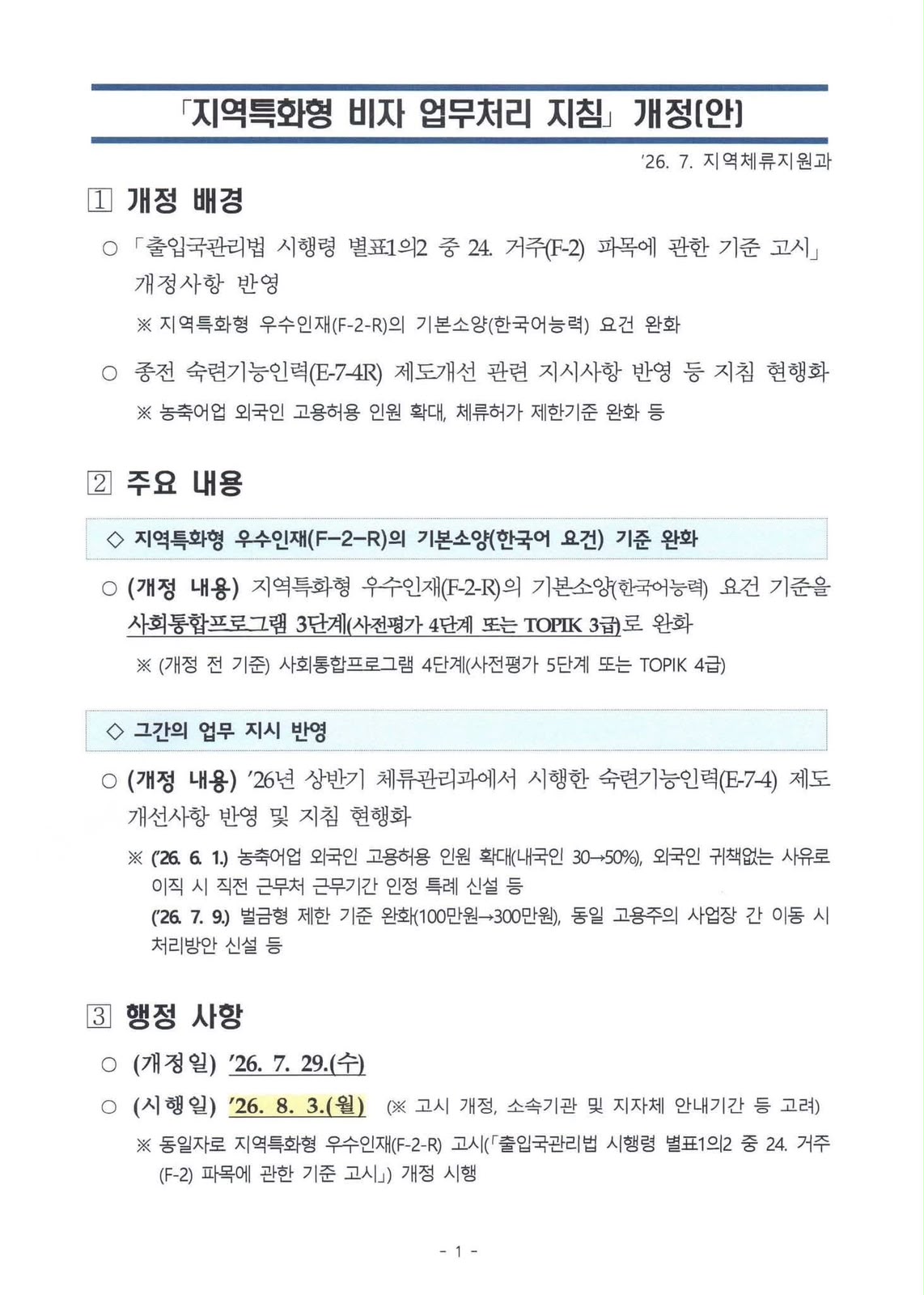
Effective from 3 August 2026, the Korean Ministry of Justice has announced significant amendments to the Regional Specialized Visa (지역특화형 비자) program.
- 1 min read
Effective from 3 August 2026, the Korean Ministry of Justice has announced significant amendments to the Regional Specialized Visa (지역특화형 비자) program. The revised guidelines are designed to attract and retain skilled foreign talent in regional areas by easing eligibility requirements and improving employment flexibility.
Lower Korean Language Requirement for F-2-R Visa
One of the most notable changes is the reduction in the Korean language proficiency requirement for the F-2-R (Regional Talent Visa).
Under the previous regulations, applicants were required to have either KIIP Level 4 or TOPIK Level 4. With the new amendment, the requirement has been lowered to KIIP Level 3 or TOPIK Level 3.
This change is expected to make the F-2-R visa more accessible to qualified foreign residents who wish to build long-term careers and settle in Korea’s regional communities.
Key Improvements to the E-7-4R Visa
The Ministry has also introduced several important improvements to the E-7-4R visa system to better support foreign professionals working in regional industries.
The amendments include:
- More flexible employment regulations.
- Easier workplace transfers under the same employer.
- An increase in the allowable immigration fine threshold in certain cases, from ₩1 million to ₩3 million.
- Expanded foreign worker quotas in the agriculture and fisheries sectors.
These measures are intended to reduce administrative barriers while helping regional employers secure and retain the workforce they need.
Effective Date
All of the above amendments will come into effect on 3 August 2026.
What This Means for Foreign Residents
The updated Regional Specialized Visa policy represents another step in Korea’s efforts to address regional labor shortages and encourage skilled foreign nationals to live and work outside the Seoul metropolitan area.
Individuals currently holding an E-7-4R visa, as well as those planning to apply for an F-2-R visa, should review the revised requirements carefully, as the new rules may provide additional opportunities for long-term residence and career development in Korea.
As implementation begins in August 2026, prospective applicants are encouraged to stay informed and seek professional guidance to understand how these changes may affect their eligibility and future plans.
Related from the ApplyUni desk
 Update
Korea’s higher education push stalls as foreign faculty numbers decline
Student enrollment at Korean universities is becoming more internationally diverse than ever before. Yet in contrast, the number of...
Read on koreatimes.co.kr(opens in a new tab)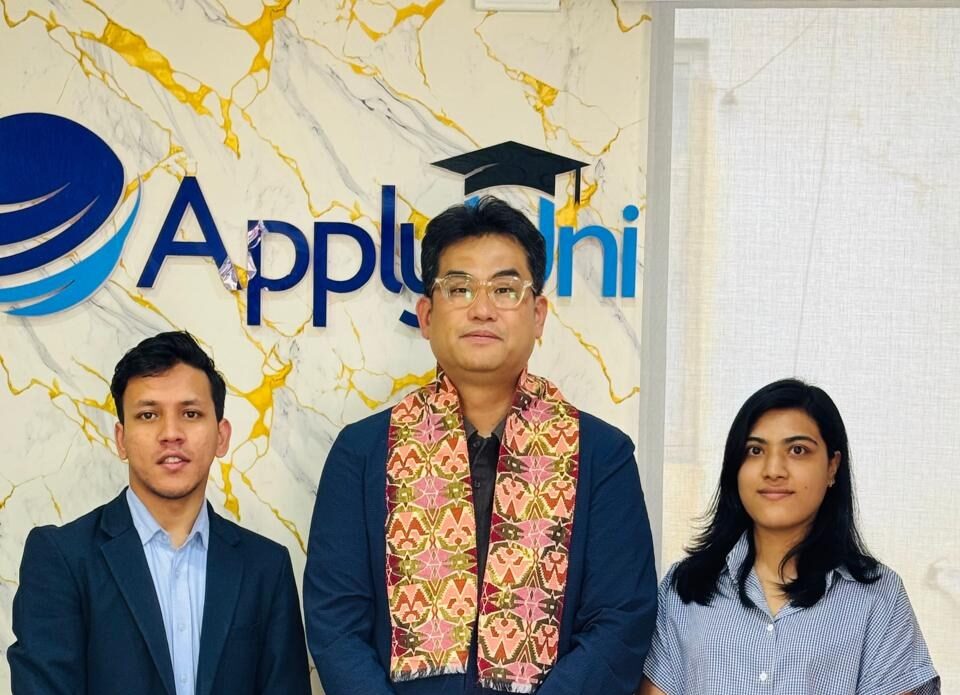 Admissions
Dongshin University Interview Session
Prof. Yohan Cho, Vice Dean from Dongshin University located in Naju, South Korea successfully held a dedicated physical interview session for students via the ApplyUni platform.
Read moreHave a question this didn't answer?
Our team in Seoul works on these applications every day — send us the detail and we'll tell you where you stand.